Buying guide
Best office chairs in Nigeria: what a ranking of 84 chairs teaches, and how to buy one that fits you
What a comfort ranking of 84 chairs reveals, how each part of a good chair works, and how to buy, fit and look after one in Nigeria's heat and dust.

Apart from your bed, your office chair is probably the thing your body spends the most time pressed against. A poor one announces itself slowly: a stiff lower back by Wednesday, tingling thighs after a long call, shoulders creeping towards your ears by four o'clock. A good one does the opposite. You stop noticing it, and that is the point.
Search for the best office chair in Nigeria and you get two kinds of advice: foreign lists full of chairs you cannot easily buy here, and local listings that call every chair "ergonomic". This guide sits between the two. It covers what makes a chair comfortable over a full working day, how to check one against your own body, and what changes when you buy here, where heat, dust, imports and after-sales support all matter.
To keep it grounded, we lean on one of the most thorough public comparisons available: the 2025 "Best Office Chairs Ranked for Comfort" guide from BTOD (btod.com), a US office furniture dealer. Its reviewers sat in 84 chairs and sorted them into six tiers, S at the top, then A, B, C, D and F. BTOD sells some of the chairs it reviews, including its own brands Lamia and Ameap, and says so openly. We treat its findings as evidence about comfort, not a shopping list, and we leave out its American prices, which mean little once a chair has crossed an ocean.
Why your chair matters more than most of your desk
A desk job can easily mean seven or eight hours in a chair, and the total creeps up once you add meals and evening screen time. The best-known research on long sitting is a 2016 analysis in The Lancet, led by Ulf Ekelund, which pooled data on more than a million adults. People who sat a lot and moved little had a higher risk of dying during follow-up, while those who managed roughly 60 to 75 minutes of moderate activity a day did not show that extra risk, even when they sat more than eight hours. The data came mostly from people over 45 in Western Europe, the US and Australia, and it shows an association rather than proof of cause. Still, the message holds: no chair cancels out a day without movement.
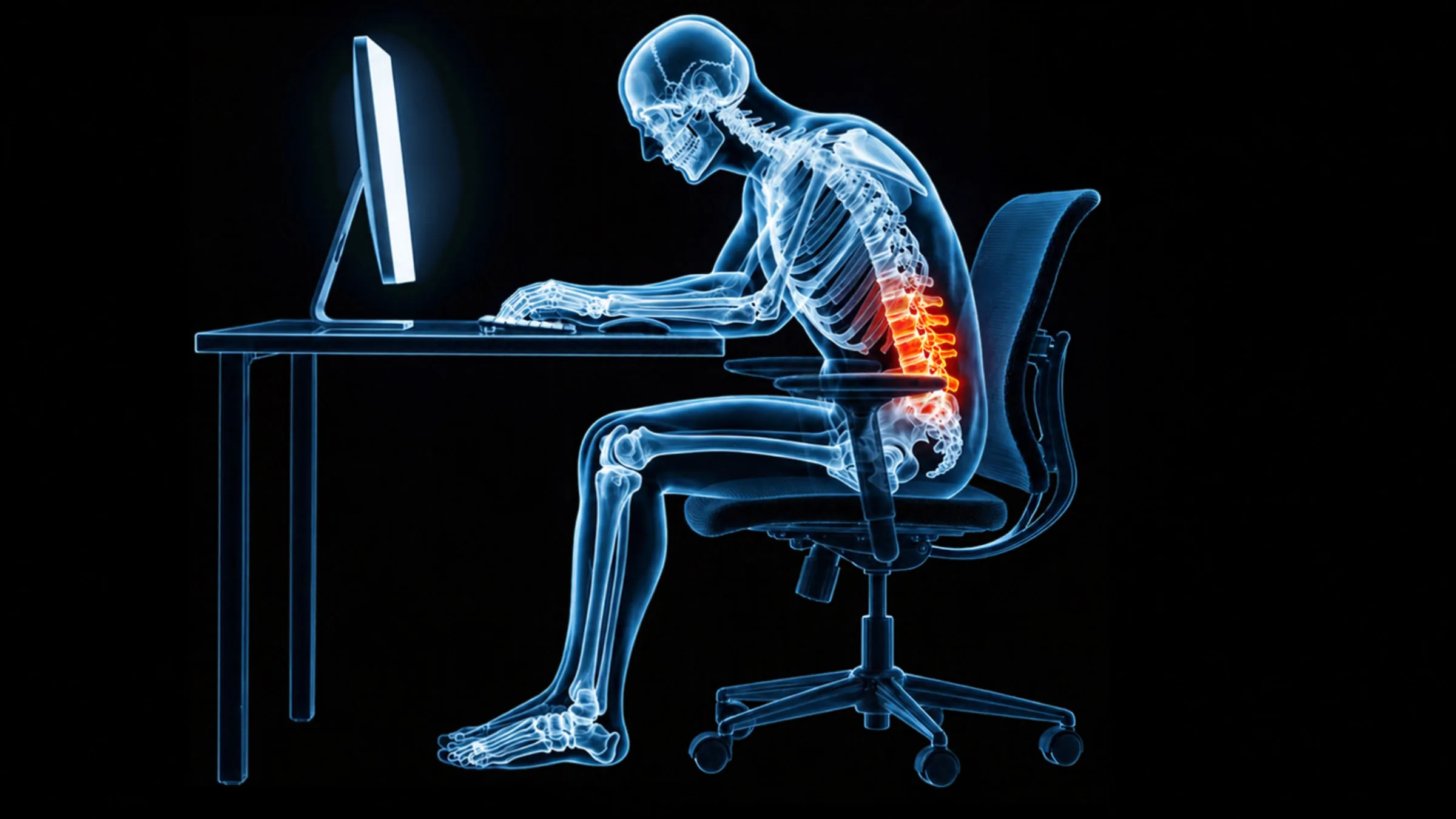
What a chair can do is make the hours you do sit less punishing. It can hold your lower back in its natural curve instead of letting it slump, keep pressure off the backs of your thighs, let your shoulders drop, and make it easy to shift position, which is what your body most wants to do. A chair that fights you on any of those turns small discomforts into the aches people blame on getting older.
What the ranking of 84 chairs teaches
Only two chairs make BTOD's S tier: its own Lamia and the Herman Miller Embody Gaming. Take the first with a pinch of salt given who wrote the list, but the second is telling. It is essentially an office chair with a gaming badge, not a racing-style seat.
The A tier reads like a roll call of serious office chairs: the Steelcase Leap, Gesture and Amia, the Herman Miller Aeron and Embody, the Haworth Fern and Zody, the Ergohuman GEN2 and Xtreme, the Eurotech Vera, the Neutral Posture XSM, the Nightwatch CMDR and BTOD's own Ameap. They do not share one magic feature. They share a seat that supports without pressing, a back that follows you when you lean, and enough adjustment for most body sizes.
The B tier matters most if your budget is tight. It includes the Colamy Atlas, the cheapest chair in that tier, next to famous names like the Herman Miller Mirra 2 and Cosm, the Steelcase Think and Karman, the Humanscale Freedom, the Haworth Soji and the gaming version of the Aeron. A modestly priced chair can sit in the same band as celebrated designs.
Lower down, the C tier includes the Herman Miller Sayl, Steelcase Series 2, HAG Capisco, Branch Ergo Pro and gaming chairs such as the Fractal Design Refine, Razer Fujin Pro and Asus Destrier. The D tier holds some surprises: the Secretlab Titan, Steelcase Series 1, the older Herman Miller Aeron Classic, Lenovo Legion, Sihoo Doro S300 and Humanscale Diffrient World. The F tier collects generic racing chairs (S-Racer and GT Racing styles), the Secretlab Omega, Razer Iskur, IKEA's Markus and Jarvfjallet, the Sihoo M18 and the Staples Hyken.
Where chairs lose comfort
The useful part of the ranking is not who wins but why chairs fall. The same complaints come up again and again, and nearly all of them are about the seat, not the back.
- Seat pads that are too firm or too thin: fine for twenty minutes in a showroom, tiring after three hours.
- A hard front seat edge that presses into the backs of the thighs.
- Seat pans too short for tall people, leaving the thighs unsupported.
- Chairs sized for one kind of body: some swallow smaller people, others feel cramped for anyone over about six feet.
- Racing-chair side bolsters that box you in and stop you shifting position.
The other lesson is blunt: price does not equal comfort. Some expensive chairs land low because of a single flaw, such as a firm edge or a short seat, while much cheaper ones reach the middle. That is good news on a limited budget, but only if you know what to check.
A chair that ranks well for most people can still be wrong for your height. Sit in it before you pay, or buy from someone who will take it back.
Anatomy of a good chair: the seat and the back
Seat pan depth. The US workplace safety agency OSHA advises that the seat should support most of your thigh without the front edge touching the backs of your knees. A common rule of thumb in workplace ergonomics checklists is a gap of two to four fingers. A seat slider, which moves the seat forward or back, is the single most useful feature if you are very tall, quite short, or sharing the chair.
Seat height range. Your feet should rest flat with your knees at roughly a right angle, at a height that also works with your desk. Shorter people often find the lowest setting still too high; taller people find the top too low. Sit with bare feet flat, measure from the floor to the back of your knee, add a little for shoes, and check that the number falls inside the chair's range, ideally not right at the edge.
Lumbar support. Your lower spine curves gently inwards, and a good chair fills that curve. Fixed lumbar is shaped into the backrest: fine if it matches your back, annoying if not. Height-adjustable lumbar slides so you can place it in the curve. Depth-adjustable lumbar also sets how firmly it pushes. It should feel like support, not a fist in your back.
Synchro tilt and tension. In a synchro mechanism the backrest reclines further than the seat tilts, so your feet stay planted as you lean back. The tension knob sets how hard you push to recline. Set it so the chair follows you back without tipping you, and does not shove you forward when you sit up.
Recline lock. Most decent chairs lock in a few positions: upright for focused typing, a few degrees back for calls and reading.
Anatomy of a good chair: arms, headrest, materials, base and gas lift
Armrests. 1D arms go up and down. 2D adds forward and back, 3D adds in and out, and 4D usually adds pivoting the pad. Height matters most: forearms resting at about desk height with shoulders relaxed. Arms that will not go low enough to slide under the desk push you away from it, which is worse than no arms.
Headrests. Useful if you recline for calls or game between work sessions, less so if you sit upright and type. A fixed headrest that hits the wrong part of your head is worse than none, so look for one that adjusts in height and angle.
Mesh, foam or fabric. A mesh back lets air move and stays noticeably cooler. Mesh seats are cooler still but divide opinion, since some people feel the frame edge after a few hours. Many of the best-ranked chairs pair a mesh back with a padded seat. Fabric is soft but holds heat and dust. PU leather wipes clean but gets hot and sticky, and cheap PU tends to peel.
Base and castors. A five-star base is standard; aluminium is lighter and stronger than plastic, though good nylon is fine. Small hard plastic wheels clatter and can scratch tiles. Larger soft polyurethane castors roll quietly on tiles and wood. On a thick rug, harder castors roll more easily, or put down a chair mat.
Gas lift. Cylinders are graded in classes; higher classes use thicker steel and carry more load. Class 3 is common on reputable ergonomic chairs and class 4 is the heavy-duty grade. If you are a big person, ask for the class, the chair's weight rating and whether it has been tested to a recognised standard such as BIFMA. A slowly sinking seat is the most common chair failure, and one of the easiest to fix if the cylinder is a standard size.
How to fit a chair to your body, step by step
A good chair set up badly is a mediocre chair. Take ten minutes on the day it arrives, in the shoes you wear at your desk.
- Seat height first. Stand in front of the chair and raise the seat to just below your kneecap. Sit: feet flat, thighs roughly level.
- Seat depth. Sit right back against the backrest and slide the seat until two to four fingers fit behind your knees.
- Lumbar. Move it into the small of your back, roughly at belt height, then adjust depth until it supports without pushing.
- Tilt tension. Release the back, lean back, and adjust until the chair follows you smoothly and holds you without effort.
- Recline. Try working a few degrees past upright, with the back free or locked there.
- Armrests. Drop your shoulders, bend your elbows to about 90 degrees, and raise the arms until they just meet your forearms.
- Desk check. Forearms should be level with the keyboard. If the desk is too high, raise the chair and add a footrest; if it is too low, the desk is the problem.
- Headrest last: it should meet your head when you lean back, not push your chin forward when you sit up.
Then live with it for a week and tweak. Your body will tell you within days if the lumbar is too high or the seat too deep.
Heat, harmattan and power cuts
Most chair reviews are written in air-conditioned offices. Most Nigerian home offices are not cooled all day, and even those that are lose it when the grid goes and the inverter is saving its battery for the router and laptop. On a hot afternoon, a thickly padded back leaves you with a damp shirt. A mesh back is the easiest win, and if you want a padded seat, choose fabric or mesh-topped foam over PU leather.
From roughly November to February, harmattan dust settles on everything and works into fabric seats, mechanisms and castors. Mesh shows dust but cleans easily with a soft brush or vacuum nozzle; fabric needs regular vacuuming. Along the coast, humidity is the other enemy: cheap chrome on bases and cylinders can pit and rust in Lagos air, so a powder-coated or aluminium base tends to age better.
Buying an office chair in Nigeria: imports, warranties and clones
Imports. Almost every office chair sold here is imported, so the price carries freight, duty, clearing and the exchange rate. That is why famous premium chairs cost far more here than abroad, and why prices move month to month. It also makes the middle of the market, well-made chairs with proper adjustment and real local support, the best value for most people.
Warranty. A long warranty only means something if someone in Nigeria will honour it. Before you pay, ask who handles claims, what is covered (frame, mechanism, cylinder and upholstery often have different terms) and what paperwork you need to keep. A grey import or second-hand chair usually has no manufacturer cover.
Fakes and clones. Famous designs are widely copied. Some clones are open about it; others put the real brand in the listing title with a price that is too good to be true. The shape can look right while the mesh, foam, mechanism and cylinder are all cheaper. Ask for the label under the seat, proof of purchase from an authorised source and a written warranty. If the seller cannot provide them, judge the chair as a copy, on its own comfort and build.
Spare parts. Cylinders, castors and arm pads wear first. Chairs with standard-size parts can be fixed by most furniture technicians; chairs with unusual parts may wait weeks for a shipment. Ask the seller what happens if the cylinder fails in year two.
Testing and returns. Fit is personal, so sit in the chair for ten minutes, not ten seconds, and run through the fitting steps. Buying online, read the return policy: how many days, who pays for collection, and whether an assembled chair can go back. With Lagos traffic, a clear return policy can be worth more than a showroom trip.
Gaming chair or office chair?
If you game and work in the same seat, an ergonomic office chair is usually the better choice. Most racing-style gaming chairs borrow the shape of a car seat: raised side bolsters, a firm and often narrow seat, and strap-on cushions. Bolsters hold a driver in place through corners, the opposite of what you want at a desk, where shifting position is healthy. That is why so many sit in the lower tiers, while the gaming chairs that do well, like the Embody Gaming, are office chairs underneath. Want the look? Pick an office-style chair in colours you like and add a headrest if you recline between matches.
What you get at each budget level
We will not quote naira prices for chairs we do not sell, because they swing with the dollar. Here is what each level of the market generally gets you instead.
- Entry level: height adjustment, a simple rocking tilt, fixed arms. Often thin foam and a hard seat edge, exactly the faults the ranking punishes. Fine for short daily use.
- Mid-range: where a chair becomes a work tool. A breathable mesh back, adjustable or well-shaped lumbar, lockable tilt with tension control, height-adjustable arms and a better cylinder. The sweet spot for most people working from home.
- Upper mid-range: adds a seat slider, 3D or 4D arms, a synchro mechanism, a sturdier base and a clearer warranty. Worth it if you are very tall or short, or sit ten hours a day.
- Premium: the famous names. Superb engineering and long lives, but inflated by import costs here, with a real risk of clones or no local warranty. Buy only from a seller who can prove where it came from.
A chair that lasts ten years can cost less per year than a cheap one replaced every eighteen months. Judge the build, not only the sticker.
Care and maintenance
- Brush or vacuum mesh and fabric weekly in harmattan, monthly otherwise, with a soft brush so you do not stretch the mesh.
- Every couple of months, pull the castors out (most pop out with a firm tug) and clear hair, thread and dust from the axles.
- Check the bolts under the seat and on the arms every few months. A creak or wobble often needs only a quarter turn.
- Keep PU leather out of direct sun and wipe it with a damp cloth; keep the base off wet floors in rainy season.
- If the seat slowly sinks, replace the gas cylinder. It is far cheaper than a new chair.
Buyer checklist
Take this to a showroom, or go through it with a seller on WhatsApp before you order.
- Does the seat height range suit my leg length and desk?
- Sitting right back, is there a two to four finger gap behind my knees? Is there a seat slider?
- Does the lumbar sit in the curve of my lower back, and can I move it?
- Is the front edge of the seat soft and rounded?
- Does the back recline smoothly, with tension control and a lock?
- Do the arms reach desk height and slide under the desk?
- Is the back breathable for hot afternoons and power cuts?
- Do the castors suit my floor?
- What is the weight rating and the gas cylinder class?
- Who honours the warranty in Nigeria, for how long, and what does it cover?
- Are cylinder, castors and arm pads standard parts I can replace locally?
- If it is a famous brand, can the seller prove it is genuine?
- What is the return policy, and who pays for collection?
Where to start
If you do one thing after reading this, measure yourself: floor to the back of your knee, and the back of your bottom to the back of your knee, both seated. Those two numbers rule out half the chairs on any listing before you sit in one.
Our ergonomic chairs start at ₦160,000 at the time of writing (November 2026). We pick them with the points in this guide in mind, including breathable backs for the heat and proper adjustment for different body sizes. They are not among the chairs BTOD ranked. If you are unsure whether one will suit your height, floor or desk, message us on WhatsApp with your measurements and we will help you choose, or snap your current setup in NestBuild to see how chair, desk and screen work together.